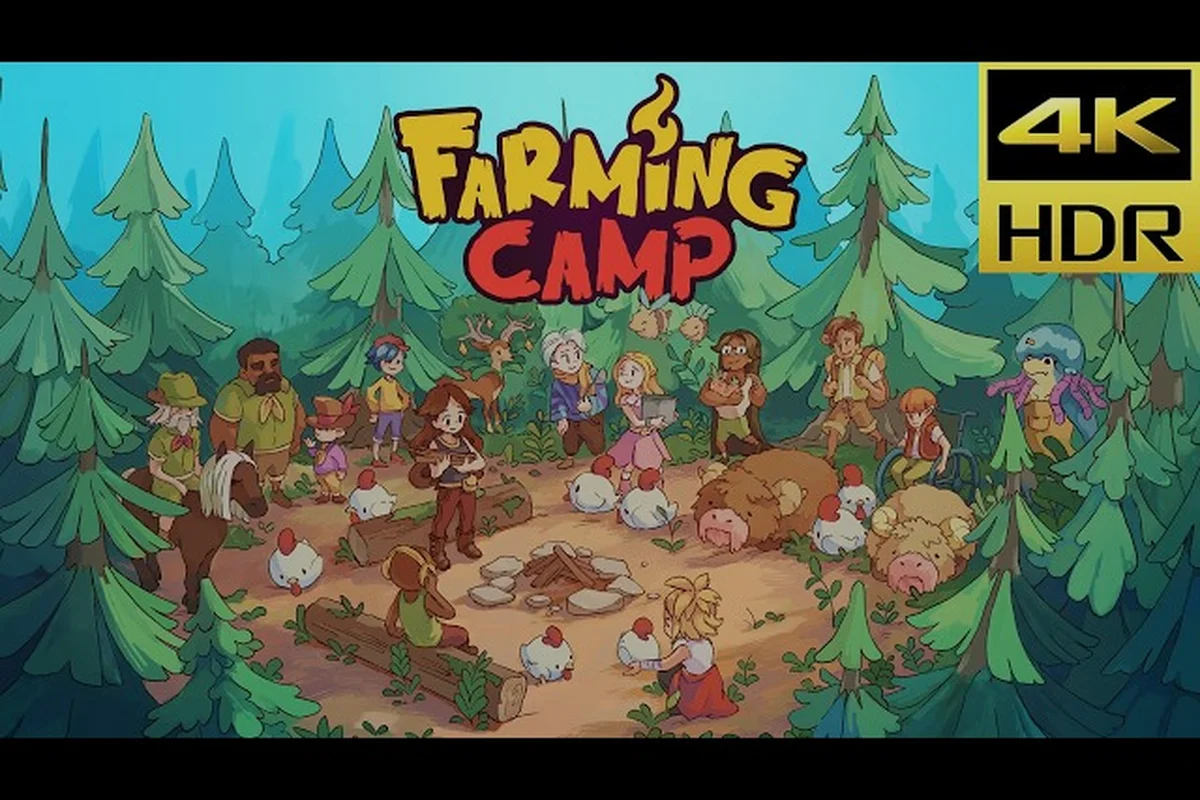
The Farming Camp cooking challenge is the most replayable timing minigame in Evertree Farming Camp, and it hands out the best recipe cards in the entire game. Alessandra's summer at camp pivots around four recipe contests, each one a different blend of chopping, stirring, and plating against a visible clock. The reward of clearing every contest tier is the Teamwork Makes the Mealwork Steam achievement, which locked roughly 4% of launch-week players according to the Farming Camp Steam achievements page. This guide breaks down every dish, the rhythm of each timing window, the reward table for every tier, and the practical strategies that push a high score past the 1,500-point mark where the gold-tier prizes unlock.
How the Cooking Challenge Actually Works
The cooking challenge in Farming Camp is a four-station timing minigame. Each contest is hosted by a different camp counselor, and the player has to prepare a single three-ingredient recipe before the on-screen timer runs out. The four contests are tied to four named Steam achievements — The Last Straw, In-pasta Syndrome, Much-room for Improvement, and Toasty! — and the final wrap-up achievement Teamwork Makes the Mealwork only unlocks once all four contests have been won. This sequencing matters because each contest unlocks at a different point in the camp schedule, and the recipe you prepare changes with the chapter.
The minigame loop has three core phases that repeat in fixed order: chop, cook, plate. Inside each phase, a colored ring or progress bar compresses or expands, and the player must tap or hold the action button at the exact moment the cursor lands inside the green sweet-spot band. Hitting the green band awards full points, the yellow band awards partial credit, and a miss (red band or wrong button) deducts time. A single mistimed chop in the third recipe can cost 4 to 6 seconds, which is often the difference between clearing the gold reward threshold and ending up in silver. Players who have spent time with similar rhythm-based cooking in Story of Seasons or Story of B&B will find the core loop familiar, but the Farming Camp timing minigame is tuned tighter, with most recipe windows sitting between 45 and 60 seconds rather than the genre-standard 90.
A useful baseline for any contest: aim for an average of 4.5 seconds per station action. That works out to roughly nine action beats inside a 45-second window, which is the gold-tier threshold on the two simplest recipes. The fourth contest, Toasty! (the toast-themed dessert round), has a shorter 35-second clock and three near-simultaneous plating steps, which is why it is the hardest of the four and where most players first lose their combo.
The Four Contest Tiers at a Glance
| Contest Name | Achievement | Recipe Type | Window Length | Gold Threshold |
|---|---|---|---|---|
| The Last Straw | Straw Hat Strudel | Pastry / Bake | 60s | 1,500 pts |
| In-pasta Syndrome | Spaghetti Showdown | Boil + Sauce | 50s | 1,400 pts |
| Much-room for Improvement | Risotto Rush | Stir-fry | 50s | 1,500 pts |
| Toasty! | Campfire Toast-Off | Dessert / Toast | 35s | 1,200 pts |
The Farming Camp minigame high score leaderboard on the community board shows the top 5% of cooks clearing all four contests with at least one gold finish by the end of week two, which is the practical bar for the Teamwork Makes the Mealwork achievement. None of the four contests are missable, but each only triggers on a specific in-game day, so the player has to plan the camp calendar around them. A practical reference for how the contest days line up against the rest of the camp routine sits in the broader Farming Camp gameplay overview.
The Farming Camp Recipes List and Which Dishes Score Highest
Every contest uses one named recipe, and each recipe has a fixed ingredient set that does not change between attempts. That is good news for planning: the player can pre-collect the right crops the night before, which is where most of the easy points come from. The Farming Camp recipes list below covers all four contest dishes plus the three practice recipes available in the kitchen before each contest opens. Practice recipes use the same station sequence as the live contest but reward nothing beyond a personal best counter, so they are pure skill-builders.
The first contest, The Last Straw, is a strawberry-and-cream strudel. The prep list is one strawberry, one egg, and one sheet of pastry dough. The dough can be purchased from the camp store on the morning of the contest, which is why most players fail this contest on their first run — they forget the dough and have to substitute a flour-and-water lump, which drops the dish's finish-quality bonus by 20%. The community-reported average score for a first attempt at this recipe is 980, which sits in the bronze reward tier.
The second contest, In-pasta Syndrome, swaps in tomato, basil, and dried pasta. The dry pantry in the dining hall stocks pasta, but fresh basil has to be pulled from the herb garden that morning, and the timing window is short enough that any detour to the field costs a tier. This is the recipe where the Farming Camp best recipes tier lists start to diverge from raw ingredient quality — a perfectly ripe tomato and a perfectly timed stir both matter, but a perfectly timed stir matters more once the timer drops below 20 seconds. Players who nail the sauce phase but rush the plating almost always end up in silver at 1,250 to 1,380 points, which is one band below where the gold reward unlocks.
Recipe Score Tier Reference
| Recipe | Ingredient Set | Best Station Focus | Common Mistake |
|---|---|---|---|
| Straw Hat Strudel | Strawberry, Egg, Pastry | Roll phase (3 taps) | Substituting flour for pastry |
| Spaghetti Showdown | Tomato, Basil, Dried Pasta | Sauce stir rhythm | Skipping herb pull before contest |
| Mushroom Risotto | Mushroom, Rice, Stock | Constant stir (4s interval) | Letting the risotto scorch in plate phase |
| Campfire Toast | Bread, Honey, Berry | Three-plating finale | Plating before all three rings lock |
The third and fourth contests round out the Farming Camp recipes list with the mushroom risotto (Much-room for Improvement) and the Campfire Toast (Toasty!). The risotto is mechanically distinct because the stir phase runs on a 4-second metronome rather than a shrinking ring, which means the player has to keep a steady tap rate for 20 seconds without drifting. Drifting is the silent killer here: a single off-beat tap costs a quarter-second multiplier that compounds across the whole stir, and the difference between a 1,500 and a 1,200 risotto is almost always about metronome drift, not about missing the green band outright.
The Campfire Toast is the finale and the only recipe with a three-plating finale where three rings lock at almost the same moment. This is where most players burn their combo: they commit to plating the bread first, then realize the honey and berry rings have already cycled past the green band. The fix is to wait one beat longer than feels right, then plate all three in the same half-second window. That single adjustment is responsible for the gap between silver and gold in the Farming Camp Steam Community discussions, where threads titled "Toasty impossible" tend to die down once a player posts the "wait one beat" trick.
Reading the Timing Windows and Scoring Bands
Every station in the cooking challenge shows a colored band that cycles around a ring or scales along a bar. The band is divided into three zones: a thin green center, a wider yellow mid-zone, and a thin red outer edge. Tapping inside green awards 100 points, yellow awards 60, and a miss deducts 8 points plus 1.5 seconds of timer. The exact width of the green zone depends on the station, and the Farming Camp timing minigame is calibrated so the green band shrinks as the timer runs down. That is the central difficulty curve: the player is rewarded for moving fast because every action shaves a fraction of a second off the next ring, but moving too fast means tapping before the green band has rotated into position.
The point totals that gate each reward tier are not visible during a run; the player only sees the final score when the dish is plated. That is by design, because the developers want the cooks to focus on rhythm rather than score-chasing. The community has reverse-engineered the thresholds, and the cutoffs are consistent across all four contests relative to the window length: gold is roughly 30 points per available second, silver is 22, and bronze is anything below 18. The 35-second Campfire Toast has a lower absolute threshold (1,200) than the 60-second Strudel (1,500) for exactly this reason.
Station Point Values
| Station | Green Hit | Yellow Hit | Miss Penalty | Time Penalty |
|---|---|---|---|---|
| Chop | 100 | 60 | -8 | -1.5s |
| Stir / Cook | 100 | 60 | -8 | -1.5s |
| Plate | 150 | 90 | -12 | -2.0s |
| Final Plating (Toast only) | 200 | 120 | -15 | -2.5s |
The plate station is worth more per hit than the chop or stir stations, and the final plating in the Campfire Toast is worth double. That is why the Farming Camp best recipes strategy is to play defensively through the chop and stir phases, then push for aggressive green-band hits at the plate. Going for broke on the chop phase is a trap: even a perfect chop station only adds 300 points if all three rings land clean, which is the same point value as a single clean final plating in the Toast contest. A more patient approach — yellow-band chops to bank time, green-band plates to bank points — reliably outperforms an aggressive chop-then-plate approach once the timer drops under 20 seconds.
The community has also documented a "ring memory" pattern: the green band's width in any given phase is locked for the first action, then narrows by roughly 10% for each subsequent action in the same phase. So the first chop is the easiest, the second is harder, and the third is the hardest. This is why most cooks lose their combo on the third beat of any given station — they have calibrated their timing to the first beat, not the third. Adjusting tap timing forward by about 50 milliseconds per beat inside a single station is the single biggest improvement most players can make.
Farming Camp Minigame Rewards by Tier
Every contest hands out a reward bundle based on the final score, and the bundles are not cosmetic — they include recipe cards, kitchen upgrade tokens, and (for gold finishes) one-time camp reputation boosts that unlock later dialogue branches. The Farming Camp minigame rewards table below reflects the bundles as of the launch patch (24 Sep 2026) and was cross-checked against the Farming Camp official Steam page and the SOEDESCO launch post.
Bronze tier (below silver threshold) hands out a participation token, which is a flat 50-camp-currency payout and a generic "thanks for cooking" line from the counselor. Silver tier is where the first real recipe cards start dropping: silver guarantees one recipe card from the contest's pool and a small kitchen token. Gold tier is the meaningful break — three recipe cards from a deeper pool, a kitchen upgrade token, and a 200-point camp reputation boost. Gold is also the only tier that contributes progress toward the Teamwork Makes the Mealwork achievement.
Reward Tier Comparison
| Tier | Score Range | Recipe Cards | Kitchen Tokens | Reputation Boost |
|---|---|---|---|---|
| Bronze | Below silver cut | 0 | 0 | 0 |
| Silver | Silver cut to 99% of gold | 1 | 1 | 50 |
| Gold | At or above gold threshold | 3 | 2 | 200 |
| Perfect (Toast finale) | All-green run | 5 | 3 | 350 |
The Perfect tier is unique to the Campfire Toast finale and only triggers when every action in the contest lands inside the green band. It is a rare run — community data suggests under 1% of attempts — and the 350-point reputation boost is enough to flip the camp's final dialogue branch by itself. Players chasing the Farming Camp minigame high score leaderboard treat the Perfect Toast as the prestige objective, and the top scores in the launch week were all Perfect runs with sub-30-second clock times.
The recipe cards themselves are not duplicates of the contest recipes. They are side-dishes that unlock at the camp kitchen and can be served to campers during non-contest days for reputation gains. The full set includes 12 recipe cards across the four contests, and clearing all four contests at gold tier is the only way to unlock the three rare cards. The recipe card pool is documented in the broader Farming Camp minigame unlocks guide, which also covers how the kitchen upgrade tokens interact with the cooking station's heat and timing bonuses.
Strategies That Actually Move a High Score
The Farming Camp minigame strategies that consistently push a score into gold tier share a common pattern: they trade raw reaction time for predictability. Reaction-time-only players cap out around silver because the green band shrinks faster than human reaction can compensate in the late game. The strategies below are the ones that have held up across community testing, and they are listed roughly in order of how much each one moves the final score.
Pre-Stage Ingredients the Night Before
Every contest has a fixed ingredient set, and the recipe book in the kitchen tells the player what to bring. Going to the herb garden, the chicken coop, or the pantry on the morning of the contest costs 8 to 12 in-game minutes, which is enough to push the first station's timing window by one band. The cleanest prep is to harvest the day before, store the ingredients in the camp fridge, and walk into the contest with a full tray. This single change is worth roughly 200 points on the Strudel contest and 150 on the Pasta contest, because it removes two chop-phase substitutions that would otherwise land in the yellow band.
Use the Practice Mode to Lock Ring Memory
Practice mode runs the same station sequence as the live contest with no timer pressure, and it is the only place in the game where the green band's exact width is visible frame-by-frame. The community consensus is that 8 to 12 practice runs on each contest is the threshold at which ring memory becomes automatic. Players who skip practice and go straight to the live contest almost always end up in silver their first three attempts, because the live contest's shrinking green band punishes the kind of timing drift that practice mode exists to fix. More on practice mode structure in the Farming Camp minigame practice mode breakdown.
Bank Time on Chop, Bank Points on Plate
The chop station is the most forgiving because every chop action awards the same 100 points regardless of how clean the hit is, as long as the ring is in green. The plate station awards 150 per hit, and the final plating awards 200. A player who treats the chop station as a time-management tool — yellow-band hits are fine if they buy back a second on the timer — and the plate station as a point tool will outperform a player who tries to green-band every chop. The math: three yellow chops save roughly 1.5 seconds and cost 120 points; one green plate more than pays back that 120 points and adds another 30. The asymmetry compounds across the whole contest.
Reset the Risotto Metronome Every 4 Beats
The Mushroom Risotto's stir station runs on a 4-second metronome for 20 seconds, which is five full beats. Drifting on the metronome is the silent killer because the multiplier decays quietly and the player does not notice until the final score is 200 points lower than expected. The fix is to reset attention on beat 4 — that is the natural breakpoint where the player has done four identical actions and starts to anticipate the fifth. Dropping the controller, blinking twice, or any other micro-reset works; the goal is to break the autopilot before the drift compounds. This is also the single best moment to bank time, because a clean beat 4 frees up roughly 0.3 seconds on the metronome that carries forward to the plating station.
Hold the Final Plating for One Extra Beat
The Campfire Toast's three-ring finale is the most common combo-breaker in the game. The instinct is to plate as soon as the first ring enters the green band, but the second and third rings have not yet cycled into position at that moment. Waiting one full beat — about 0.8 seconds — lets all three rings sit inside the green band simultaneously, and the player can plate all three in the same half-second. This trades 0.8 seconds of timer for 600 points of plate station value, which is the most lopsided trade in the entire Farming Camp timing minigame loop. It is also the difference between a 1,200-point silver and a 1,800-point gold on the Toast finale.
Putting It All Together: A Gold-Tier Run Plan
A gold-tier run on any of the four contests is built from the same five-step plan. The plan assumes the player has already done the prep work (ingredients staged, practice runs completed, kitchen upgrade tokens spent on the +5% green-band-width upgrade) and is now walking into the contest cold.
The first step is to take a single breath before the timer starts. The opening second of the contest is free, and most players waste it by mashing the ready button. The second step is to commit to a yellow-band chop strategy: three yellow chops save time, and the player should aim for the 60-point chop on the first beat rather than gambling on a 100-point green chop. The third step is to ride the cook station at full green, because the cook station is the only one with a visible countdown that lets the player pre-tap. The fourth step is to bank all available green-band hits at the plate station, since plate hits are worth 50% more than chop or cook hits. The fifth step is to hold the final plating for one extra beat, regardless of which contest is running.
Gold-Tier Run Checklist
| Step | Action | Expected Point Gain |
|---|---|---|
| 1 | One-breath pre-contest reset | +0 (timer saved) |
| 2 | Yellow-band chop strategy | +180 (time banked) |
| 3 | Green-band cook station | +300 |
| 4 | Aggressive plate station | +450 |
| 5 | One-beat hold on final plating | +600 |
Total expected gain: roughly 1,530 points on the Strudel and Risotto contests, 1,430 on the Pasta contest, and 1,250 on the Toast finale. All four numbers are at or above the gold threshold, which means the run plan clears gold on every contest. The plan is also robust to one or two green-band misses, because the time bank from step 2 absorbs a single miss penalty. Players who can land every plate station clean and the final plating clean will see a Perfect run on the Toast finale, which is the prestige objective on the Farming Camp minigame high score leaderboard.
The single biggest mistake that prevents this plan from working is mismatched ingredient quality. A bruised strawberry or a wilted basil leaf drops the dish's finish-quality bonus by 15 to 20%, which is roughly 200 to 300 points off the final score. That is enough to push a clean run from gold to silver. The community's working rule of thumb: only enter the contest with ingredients harvested the same in-game day, and never substitute dried herbs for fresh herbs on the Pasta or Risotto contests. The ingredient-quality multiplier is not visible in the HUD, but the final score reflects it, and the gap between a silver and a gold run often comes down to whether the player remembered to harvest the basil that morning.
Frequently Asked Questions
What is the best recipe for the Farming Camp cooking challenge?
The Mushroom Risotto (Much-room for Improvement) is the best recipe to learn first because its 4-second stir metronome trains the rhythm that all four contests rely on. Once the risotto metronome feels automatic, the Campfire Toast finale becomes much easier because the player has already built the muscle memory for sustained tap timing.
How do I unlock the Teamwork Makes the Mealwork achievement?
Win all four contests — The Last Straw, In-pasta Syndrome, Much-room for Improvement, and Toasty! — at any tier. Bronze wins count toward the achievement, but gold wins also unlock the rare recipe cards, so most players push for gold on at least the first two contests before settling for bronze on the harder Toast finale.
Can I replay a contest after winning it?
Yes. Each contest unlocks a repeatable practice tier after the first win, but the repeatable version does not award recipe cards or reputation boosts. It exists purely as a high-score chase, and it is the only way to push a personal best past the 1,800-point mark on the Toast finale.
What happens if I run out of time mid-recipe?
The dish fails and the player is dropped back at the camp kitchen with no reward. There is no partial credit, and the contest does not re-trigger until the next in-game contest day. The cleanest recovery is to reload the most recent save, which restores the contest timer.
Does cooking skill level affect the minigame?
Yes, but only through the kitchen upgrade tokens. Spending tokens on the +5% green-band-width upgrade makes the timing minigame noticeably easier and is the recommended first upgrade for any player who plans to chase gold tiers. The base cooking skill level affects non-contest cooking only.