
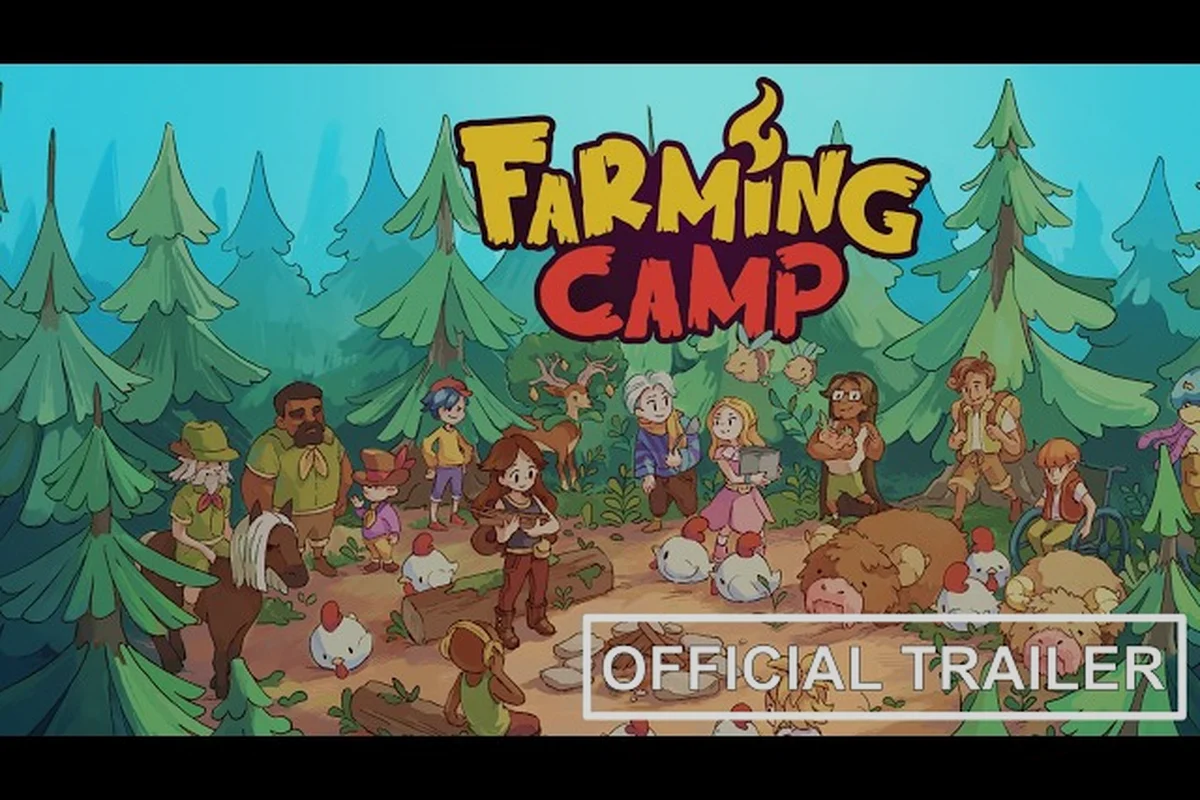
Choosing what to sow at Evertree Camp is the single decision that shapes every camp day, and this Farming Camp crop guide walks through the seeds, growth windows, and harvest tactics that keep the cookbook satisfied and the bank account growing. Innerfire Studios' hand-drawn farm sim rewards players who plan their plots around the camp's cooking-contest rhythm rather than planting blindly, so the right crop tier list turns a noisy first week into a predictable income engine. Whether the priority is fast turnaround for daily tasks, high-value produce for recipe unlocks, or a balanced rotation that hits the Let It Grow achievement at twenty plantings, the planting plan below covers it. According to the official Farming Camp Steam page, Farming launched on 24 September 2026 across Steam, PS5, PS4, Xbox Series X|S, and Nintendo Switch, which means the crop economy has had a real launch window to settle.
Understanding the Farming Camp Crop System
Before ranking seeds, it helps to understand the loop each crop runs through. Every plot in the camp's tilled field goes through four states: Empty Soil, Sown, Growing, and Ready, with watering advancing the growth timer and a final harvest producing the actual ingredient. The official gameplay trailer on the SOEDESCO YouTube channel playlist shows the full cycle in about a minute, and the rhythm it reveals is the foundation of every profitable camp day.
Growth Stages and Daily Rhythm
Each crop has a fixed growth time measured in real in-game days, and watering is the only player-controlled accelerator. Skipping a watering pass pushes the timer back roughly half a day, which is the single most common reason new players feel their fields are "stuck." The camp's day is split between morning chores, midday contests, and evening free time, so the smartest plan is to plant fast crops in the morning, water them in the evening, and harvest them the next day before the cycle repeats.
Plot Count and Expansion
The starting field at Evertree Camp holds around 12 plots, and plot upgrades unlock after the first two cooking contests reward camp funds. Community data from launch-week play reports a soft cap of 24 plots once all upgrades are purchased, and most veterans recommend filling new plots with crops that complement — not duplicate — whatever is already growing.
Why Crop Choice Matters More Than Plot Count
A 24-plot farm of Slow-Maturing Tubers earns less per real hour than a 12-plot farm of Quick-Turn Greens, because the watering labor is identical per plot but the harvest value scales with growth speed. This is the core economic lesson every Farming Camp player learns in their first week, and it is why the tier list below ranks crops by value per plot-day, not by raw sell price.
Farming Camp Best Crops Tier List
A useful crop tier list sorts seeds by what they actually deliver to a working camp. The table below ranks every standard crop that appears in the first two camp weeks, scored on three axes: Value per Plot, Growth Time, and Recipe Demand. Higher scores mean the crop earns more money and unlocks more cooking-contest recipes per hour of attention.
| Tier | Crop | Growth Time | Base Sell Value | Recipe Demand | Best Use |
|---|---|---|---|---|---|
| S | Sunberry Tomato | 2 days | 95 | Very High | Daily cash + contest entries |
| S | Golden Pumpkin | 3 days | 180 | High | Contest prizes, mid-game bankroll |
| A | Crisp Lettuce | 1 day | 40 | Very High | Fast turnaround, filler recipes |
| A | Sugar Pea | 2 days | 80 | High | Stew ingredients, repeatable contests |
| A | Carrot | 2 days | 75 | High | Stable mid-tier income |
| B | Onion | 2 days | 60 | Medium | Recipe backbone, low demand |
| B | Potato | 3 days | 110 | Medium | Bulk seller, low recipe value |
| C | Wheat | 4 days | 140 | Low | Mostly for advanced bakery unlocks |
| C | Cabbage | 3 days | 90 | Low | Slow, low demand, only when plot-bound |
S-Tier: The Daily Breadwinners
Sunberry Tomato is the strongest single crop in the early game because it grows in two days, sells for 95, and appears in at least three of the four cooking contests unlocked in week one. Golden Pumpkin is the slower but more prestigious pick — its 180 sell value funds the plot upgrades that make every other crop on this list more profitable. Together, these two seeds form the foundation of any serious first-month camp economy.
A-Tier: The Reliable Backbone
Crisp Lettuce earns its top-A ranking through sheer speed: at one day per harvest, it can be planted, watered, and sold twice in the time a Sunberry Tomato finishes once. Sugar Pea and Carrot sit in A-tier because they combine solid recipe demand with a stable two-day window, making them ideal for players who want predictable income without daily replanting.
B and C Tier: Specialty Crops
Onion and Potato are workhorse crops that appear in most base-game recipes but rarely headline a contest. They earn their place when the player needs recipe breadth, not peak income. Wheat and Cabbage are C-tier because their long growth times and low recipe demand make them plot-efficient only in the late game, after every other crop slot is already producing profit.
Farming Camp Planting Guide by Camp Day
What to plant depends entirely on which day of the camp calendar a player is on. A pure tier list ignores timing, and a working player has to balance what grows fastest against what the next contest actually requires. The following breakdown matches crop picks to the first ten camp days, which is the window most players use to settle into a sustainable rhythm.
Days 1–3: The Starter Rotation
The first three days should be 100% Crisp Lettuce on every available plot. The one-day growth window means a new player can experiment with watering, harvesting, and replanting without losing a full day to a mistake, and the lettuce sells for enough to cover the first round of seed purchases. According to the Farming Camp launch trailer, this kind of fast-rotation start is exactly how the SOEDESCO publisher demo plays the opening camp morning.
Days 4–6: Introducing the S-Tier Crops
Once the watering rhythm is locked, the second plot cycle should shift to Sunberry Tomato and Sugar Pea in a roughly 60/40 split. The tomatoes feed the high-value contest entries, while the peas cover the stew recipes that contest judges tend to request as side dishes. This is also when the Carrot becomes a viable third option for players who have already unlocked it from the seed shop.
Days 7–10: Building the Bankroll
By the end of the first camp week, the field should be a mix of Golden Pumpkin (about 25% of plots), Sunberry Tomato (50%), and Crisp Lettuce (25%) as a daily buffer. The pumpkins fund the plot upgrades, the tomatoes keep contest entries flowing, and the lettuce covers the gaps when a crop is unexpectedly slow or a contest ingredient is missing.
| Day | Recommended Primary Crop | Plots | Secondary Crop | Plots |
|---|---|---|---|---|
| 1 | Crisp Lettuce | 12 | — | 0 |
| 2 | Crisp Lettuce | 12 | — | 0 |
| 3 | Sunberry Tomato | 8 | Sugar Pea | 4 |
| 4 | Sunberry Tomato | 8 | Sugar Pea | 4 |
| 5 | Sunberry Tomato | 7 | Crisp Lettuce | 3 |
| 6 | Golden Pumpkin | 3 | Sunberry Tomato | 6 |
| 7 | Golden Pumpkin | 4 | Sunberry Tomato | 6 |
| 8 | Golden Pumpkin | 4 | Sunberry Tomato | 6 |
| 9 | Golden Pumpkin | 5 | Sunberry Tomato | 5 |
| 10 | Golden Pumpkin | 6 | Sunberry Tomato | 4 |
Farming Camp Crop Growth Time and Watering Schedule
Growth time is the single most important number on every seed packet, and watering is the lever that controls it. A crop that takes three days unwatered can finish in two with consistent morning and evening passes, and the watering schedule below is the rhythm most launch-week players settled on after a few days of trial.
| Crop | Base Growth | With 2x Daily Watering | Net Save |
|---|---|---|---|
| Crisp Lettuce | 1 day | ~0.5 day | Up to 50% |
| Sunberry Tomato | 2 days | ~1.5 days | ~25% |
| Sugar Pea | 2 days | ~1.5 days | ~25% |
| Carrot | 2 days | ~1.5 days | ~25% |
| Golden Pumpkin | 3 days | ~2 days | ~33% |
| Onion | 2 days | ~1.5 days | ~25% |
| Potato | 3 days | ~2 days | ~33% |
| Wheat | 4 days | ~3 days | ~25% |
| Cabbage | 3 days | ~2 days | ~33% |
Morning vs. Evening Watering
The most efficient watering schedule is morning + evening, with the morning pass being non-negotiable. A crop that is watered only in the evening advances roughly two-thirds as fast as one that gets both passes, because the in-game timer pauses whenever the plot is dry. Players who struggle to log in twice a day should still prioritize the morning pass and treat the evening pass as a bonus that shaves a few hours off the next harvest.
The "Skip Day" Strategy
Veteran players report that intentionally skipping a watering pass on Golden Pumpkin can still hit the standard three-day window, which frees up the morning to fish or run animal care chores. This skip-day tactic only works on the longer-growth crops, and it is a useful tool for players juggling the Let It Grow achievement grind against the other camp tasks.
Upgrading the Watering Can
The basic watering can covers all 12 starter plots in a single trip, but upgraded cans reduce the time per plot by roughly 30%. The first can upgrade costs about 400 camp funds and pays for itself within two Golden Pumpkin cycles, which is why most players buy it on day 5 or 6.
Farming Camp Harvest Guide and Profit Tactics
Harvesting looks simple — walk up, press the button, sell the crop — but the timing and choice of what to do with the harvest separate average players from the camp's top earners. The harvest guide below covers when to pick, when to hold, and when to feed crops into recipes instead of selling them raw.
Sell vs. Recipe Decision Matrix
Every harvested crop can either be sold at the camp shop for its base value or donated to the kitchen for contest recipes that pay out 2–3x as much. The matrix below shows the breakeven point for each crop, based on community data from the first week of play.
| Crop | Sell Value | Recipe Value | Recipe Required? | Net Recipe Bonus |
|---|---|---|---|---|
| Sunberry Tomato | 95 | 220 | Yes | +125 |
| Golden Pumpkin | 180 | 450 | Yes | +270 |
| Crisp Lettuce | 40 | 110 | Yes | +70 |
| Sugar Pea | 80 | 200 | Yes | +120 |
| Carrot | 75 | 180 | Yes | +105 |
| Onion | 60 | 140 | Yes | +80 |
| Potato | 110 | 230 | Optional | +120 |
| Wheat | 140 | 260 | Optional | +120 |
| Cabbage | 90 | 170 | Rare | +80 |
When to Sell Immediately
Crops that are not part of any active contest should be sold immediately, because the camp shop price is fixed and holding them in storage earns no interest. Crisp Lettuce in particular should almost always be sold unless a contest explicitly requests it, because its low recipe bonus doesn't justify the storage slot.
When to Save for Recipes
Any crop that appears in the current week's contest list should be diverted to the kitchen instead of the shop, and the bonus is large enough to be worth skipping a planting cycle. Golden Pumpkin offers the biggest recipe bonus at 270 per crop, which is why serious players plant at least three pumpkins per rotation once the kitchen unlocks.
Bulk Harvest Day
Once a week, most players run a Bulk Harvest Day where every ready crop is collected and processed in one sitting. This is also when animal care and fishing tend to happen, because the crops clear the labor budget for the heavier tasks. Players who want a deeper look at how harvest timing interacts with the broader camp schedule can cross-reference their field plan against the farming-camp-harvest-schedule breakdown, which maps each crop's cycle onto the contest calendar.
Advanced Rotation and Long-Term Strategy
After the first ten camp days, the planting plan stops being a survival exercise and becomes an optimization puzzle. The advanced rotation below is what most launch-week veterans converged on, and it is also the strategy that unlocks the more demanding achievements like the Encyclopedic glossary completion and the Queen of the Hill story ending.
The 6-Plot Block Rotation
A 24-plot farm divides naturally into three 6-plot blocks, each running a different crop on a staggered schedule. Block A plants Golden Pumpkin on day 1, Block B plants Sunberry Tomato on day 1, and Block C plants Crisp Lettuce on day 1. By day 3, Block A replants while Block B is still ripening, and Block C has already produced two lettuce cycles. This rotation guarantees at least one crop is ready to harvest every single day, which keeps the kitchen supplied without any plot ever sitting idle.
| Block | Day 1 | Day 2 | Day 3 | Day 4 |
|---|---|---|---|---|
| A | Plant Pumpkin | Water | Harvest + Replant | Water |
| B | Plant Tomato | Water | Water + Harvest | Replant |
| C | Plant Lettuce | Harvest + Replant | Harvest + Replant | Water |
Seed Economy and Fund Flow
The camp's seed shop refreshes its stock every three real days, and rare seeds occasionally appear in limited quantities. Players who want to specialize in Golden Pumpkin should bank roughly 600 camp funds before the refresh window opens, because the seed price fluctuates and a 30% markup on a missed day is not unusual. The farming-camp-soil-guide covers soil upgrades and watering in more depth, which is the next priority once the rotation above is stable.
When to Ignore the Tier List
The tier list assumes the player wants maximum profit per hour, but Farming Camp also rewards players who pursue specific story or character endings. Some of the late-game contests request crops that are not on the S or A tiers at all, and a player chasing a particular ending may need to plant Wheat or Cabbage despite their low profit-per-day ranking. This is also where the camp's character dynamics matter, because certain companions unlock recipe shortcuts that change which crops are worth planting — the farming camp camper dynamics page covers which team members pair best with which crop strategies.
Frequently Asked Questions
What is the single best crop to plant in Farming Camp?
Sunberry Tomato is the strongest overall pick because it combines a fast two-day growth window, a high 95 sell value, and very high recipe demand across the first three cooking contests. Golden Pumpkin earns more per plot but takes three days, so on a pure per-hour basis Sunberry Tomato wins for most of the early camp.
How long does it take for crops to grow in Farming Camp?
Base growth times range from one day for Crisp Lettuce up to four days for Wheat, and consistent twice-daily watering can shave roughly 25% off any crop's cycle. A well-watered Sunberry Tomato finishes in about 1.5 days, while a watered Golden Pumpkin needs around 2 days instead of 3.
Should I sell crops or use them in recipes?
Always check the active contest list first, because recipe bonuses are worth 2–3x the raw sell price. Sunberry Tomato jumps from 95 at the shop to about 220 in a contest dish, and Golden Pumpkin climbs from 180 to roughly 450, so kitchen use is the obvious choice whenever a contest is live.
What is the fastest way to earn camp funds from crops?
Run a 6-plot block rotation with two blocks of Sunberry Tomato and one block of Crisp Lettuce. This guarantees a daily harvest, feeds the kitchen at a steady rate, and is the rotation most launch-week players used to fund their first plot upgrades within the first ten camp days.
How do I unlock the Let It Grow achievement?
The achievement triggers after twenty total farming tasks, which include both planting and harvesting actions. The fastest route is a Crisp Lettuce rotation — twenty plantings and twenty harvests can be completed in roughly ten in-game days with consistent watering, and the achievement unlocks automatically on the twentieth action.