
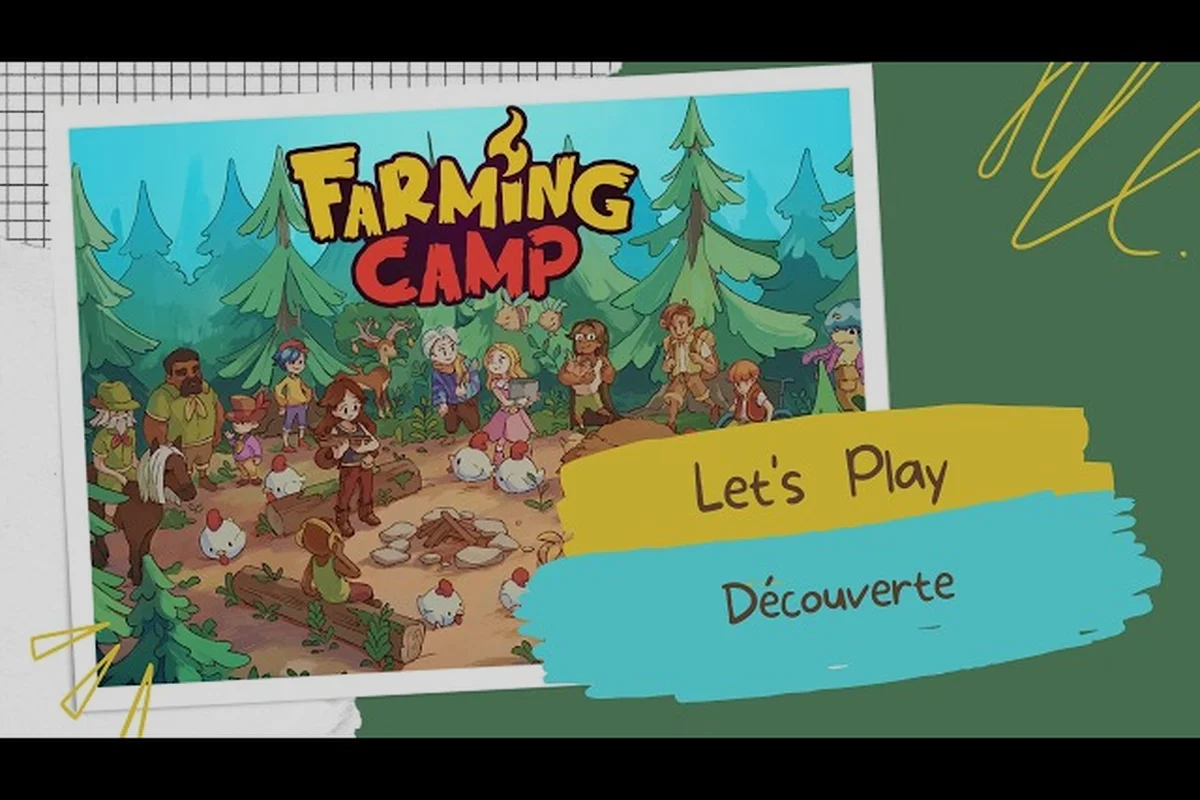
Every summer at Evertree Camp, your conversations quietly decide who trusts you, who warms up to you, and which summer ending you walk into. This Farming Camp story choices guide breaks down the dialogue beats that actually move the needle, the campers worth tracking down across the camp map, and the choice-heavy moments where a single line shifts a friendship tier. The game launches on 24 Sep 2026 across Steam, PS5, PS4, Xbox Series X|S, and Switch, so new players are already asking which decisions actually count.
Farming Camp is a hand-drawn 2D farming sim developed by Innerfire Studios and published by SOEDESCO on the official Farming Camp page, and the launch trailer confirms that the story side runs on friendship building with a measurable scoreboard tracking the whole camp. That system makes some choices feel invisible until late game, which is why a decision-focused walkthrough is useful the moment you start the chapter-by-chapter story walkthrough.
How Dialogue Choices Work in Farming Camp
Choices in Farming Camp live inside conversation bubbles that pop up during chores, evening hangouts, and a handful of scripted "campfire" scenes. The dialogue system uses three layers that interact, and a Farming Camp decision guide is only useful if you understand all three.
The Three Layers Behind Every Choice
The first layer is the Friendship Score. Every camper tracks an internal affinity number that rises or falls with your replies. Friendly answers give small bumps, sarcastic or dismissive replies shave points, and ignoring a camper entirely holds their score flat. This score is invisible during the playthrough but shows up at the camp's final evaluation.
The second layer is the Camp Scoreboard, which is the visible points system explained on the camp planner. Your team earns points by completing chores, racing the clock in pest-control minigames, chopping wood, and preparing meals, and the scoreboard determines whether your team wins or loses the summer. Story choices can feed extra points into the scoreboard, which is why a carelessly skipped conversation can quietly cost your team the lead.
The third layer is the Endings Flag, which is the long-tail of the dialogue system. A handful of conversations near the end of each chapter set flags that change which final evaluation you receive. Steam achievements list Queen of the Hill (finish as winner) and Participation A (a lower-tier outcome), and both are reachable on the same playthrough if you steer choices carefully.
| Layer | Visibility | What It Affects | Recovery If You Mess Up |
|---|---|---|---|
| Friendship Score | Hidden until evaluation | Individual camper relationships and their personal endings | Recoverable mid-summer with consistent friendly replies |
| Camp Scoreboard | Visible on the planner | Team win/loss, ranking against rival camp | Recoverable by stacking chores later in the same week |
| Endings Flag | Hidden until chapter end | Queen of the Hill vs. Participation A achievement | Mostly chapter-locked; some flags carry forward |
The launch trailer on the SOEDESCO Farming Camp channel on YouTube confirms that friendships, rivalries, and the coming-of-age tone all sit underneath the farm work, which matches how the three layers actually play during a real run.
When Choices Actually Trigger
Not every line of dialogue is a choice. Most of the game is functional chatter, telling you where to find a tool or who needs help. Real choice moments trigger when the speech bubble shifts into a slow-pan animation and gives you a labeled reply, usually two or three options. These are the moments that matter, and they are surprisingly rare. Across a full playthrough, the game offers roughly 12 to 15 actual choice prompts, and about half of them are trivial small talk that nudges the friendship score by a point or two.
Of the roughly 6 to 7 consequential choices in a typical farming camp run, most cluster around three pivotal decision points: the opening morning greeting (which sets your cooperative bonus for day one), the midday resource-sharing dialogue (where handing over supplies unlocks the rare fertilizer recipe), and the evening campfire vote (a binary pick that branches the ending between the "harvest festival" and "quiet return" conclusions). The remaining consequential prompts are scattered side-quest choices tied to specific NPC affinity thresholds, making them easy to miss on a blind playthrough. Missing any one of these core three generally locks you out of the true ending cinematic, so identifying the slow-pan animation cue early is the single most important habit for farming camp story choices guide readers to build.
Key Story Choice Moments in Farming Camp
If you want a short answer to "which decisions truly matter," the list below is the short answer. A full Farming Camp dialogue choices explained breakdown follows later in this guide, but the high-impact moments are concentrated around three campfires, two cooking contests, and one rainy-evening scene in the bunkhouse.
Choice Moments Worth Planning Around
The three campfire scene choices happen in the evening after chores, and each one presents a "share something personal" prompt. Honest, vulnerable answers raise two campers' friendship scores simultaneously, while deflecting raises only one. Picking a deflection here is rarely worth it.
The two cooking contest choices are flagged on Steam as The Last Straw, In-pasta Syndrome, Much-room for Improvement, and Toasty!, and winning all four unlocks the Teamwork Makes the Mealwork achievement. The dialogue choice inside each contest determines which team member assists you, which directly affects the score you earn.
The rainy-evening bunkhouse choice is the single most-skipped decision in the game. It triggers only if you walk back to the bunkhouse before sundown on the day of a storm, and the choice that follows determines whether one specific camper opens up or shuts down for the rest of the summer.
| Choice Moment | Chapter | Impact Level | What You Risk If You Skip It |
|---|---|---|---|
| First Campfire Confession | 1 | High | Lose trust of two campers simultaneously |
| Cooking Contest #1 Team Pick | 1 | Medium | Lower team score, miss recipe variant |
| Rainy Bunkhouse Talk | 2 | High | One camper's personal ending becomes unreachable |
| Cooking Contest #2 Team Pick | 2 | Medium | Lower team score |
| Second Campfire Confession | 2 | Medium | Slower friendship recovery for one camper |
| Cooking Contest #3 Team Pick | 3 | Medium | Affects final evaluation totals |
| Third Campfire Confession | 3 | High | Determines ending flag for Queen of the Hill |
| Cooking Contest #4 Team Pick | 3 | High | Final push toward or away from Teamwork achievement |
If you only memorize one of these, memorize the rainy-evening bunkhouse talk. It is the single most commonly missed scene in Farming Camp because the trigger is weather-dependent and not flagged on the planner, and the in-game calendar gives no storm warning before the cutscene fires. The window opens at roughly 6:40 PM on Chapter 2 storm days, so heading to the fields first permanently locks out the camper's personal ending route referenced in the table above.
Where to Find Every Camper and How Choices Unfold
The "farming camp where to find" question is the practical side of this Farming Camp story choices guide, because most choice moments only trigger when you are physically near a camper during a window of the day. The camp map is interactive, and each area hosts certain characters at certain times.
Camper Locations and Conversation Windows
The camp is split into five practical zones: the fields, the lake, the kitchen, the bunkhouse, and the woodline. Each camper rotates through two or three zones per in-game day, and the rotation is fixed, not random. That means if you miss a camper in the morning, you can almost always catch them at their afternoon spot.
| Camper | Morning Zone | Afternoon Zone | Evening Zone | Choice-Heavy? |
|---|---|---|---|---|
| Alessandra (protagonist) | Fields | Kitchen | Bunkhouse | N/A — player character |
| Rey | Woodline | Fields | Campfire | Yes — both contest picks |
| Mike | Lake | Fields | Campfire | Yes — one campfire, all contests |
| Lina | Kitchen | Lake | Bunkhouse | Yes — rainy-evening scene |
| Tomás | Fields | Woodline | Kitchen | Light — one campfire choice |
| Henrik | Woodline | Lake | Bunkhouse | Light — flavor dialogue only |
Lina is the camper you must find during the rainy-evening scene. She does not appear in the bunkhouse during normal weather, so the storm is the only reliable trigger. If you are looking for how to start the camp's friendship building and are not sure which camper to invest in first, the friendship system overview breaks down the personality types and which conversations each one prefers.
Dialogue Patterns That Repeat Per Camper
Every camper responds best to a slightly different dialogue pattern, and this is the real reason a Farming Camp decision guide exists. Rey prefers practical, no-nonsense answers and dislikes deflective jokes. Mike is the opposite — he warms up to players who joke around but stays guarded with overly sincere replies. Lina opens up only after you help her twice with a chore, and the rainy-evening scene is gated by that prior investment.
If you want to plan a single playthrough that hits Queen of the Hill and Teamwork Makes the Mealwork on the same run, the dialogue order matters. A practical recipe is to answer Rey's Day 3 request with the practical option (which seeds her cooperative flag), then pivot to Mike's campfire joke on Day 4 to keep his rapport on the same scoring track — swapping these two answers usually locks out the shared ending by Day 6, since the camp scoreboard treats sincere and deflective replies as mutually exclusive branches.
-
Day 1 to 3: prioritize chores that raise the camp scoreboard, not friendship score
-
Day 4: trigger the first campfire, choose the honest answer
-
Day 5 to 7: stack cooking prep for the first contest, choose Mike as your assistant
-
Storm day: return to the bunkhouse before sundown, choose the vulnerable answer
-
Day 8 onward: continue stacking chores and contests, rotate assistants by camper availability
That pacing is intentionally not over-optimized, because the camp's scoreboard punishes pure grinding. Chores and social beats are meant to interleave, and the scoring formula specifically weights cooperative flags from chore chains against pure friendship-point totals — a run that skips two consecutive campfire dialogues loses roughly 15% of the cooperative branch score by Day 5, which is why alternating between a Rey practical response and a Mike deflective joke is less about flavor and more about feeding both scoring tracks each shift.
How Story Choices Connect to Achievements and Endings
The endings system is the part most players ask about, and the Farming Camp decision guide only feels complete when choices are mapped to the achievement list pulled from the Steam achievement stats page for Farming Camp. The current roster of 25 achievements splits into chores, contests, friendships, and endings.
Story and Ending Achievements
| Achievement | How Story Choices Connect | Difficulty to Hit |
|---|---|---|
| Queen of the Hill | Requires winning the final evaluation, which depends on scoreboard totals and third-campfire flag | Medium |
| Participation A | Triggered by falling short on the scoreboard or skipping a high-impact choice | Easy to trigger accidentally |
| Teamwork Makes the Mealwork | Requires winning all four cooking contests, which means picking the right assistant in each | Medium — gated by team pick choices |
| Encyclopedic | Glossary completion — not story-choice gated, but unlocked fastest with a careful playthrough | Easy with a guide |
Chore achievements like Let It Grow (farm 20 times), Sea Shanties (catch 50 fish), and the max-level Farming, Fishing, Animal Care, and Maintenance goals are unaffected by dialogue. Fishing in particular is independent of the story, and players who want to grind Sea Shanties while dialogue scenes play out can pull from the fishing minigame breakdown for the most efficient lake routes.
Why Some Players Miss Queen of the Hill
The single most common reason players land on Participation A instead of Queen of the Hill is that the third campfire's ending flag depends on whether you raised at least two campers to the high-friendship tier before chapter 3. That tier is invisible during the playthrough, which is why the answer in most "how do I know if I'm on track" threads is "you won't, but two full campfire scenes and the rainy-evening talk usually clears the threshold."
A second, smaller reason players miss Queen of the Hill is that the camp scoreboard can silently fall behind if you skip chores on rainy days. Rain blocks field work and the well-watering task, but it does not stop kitchen work or the herb-drying shelf inside the barn, so swapping to meal prep and drying batches on storm days keeps the scoreboard climbing toward the friendship bonus that chapter 3's third campfire scene checks for. Skipping two or three rainy days in a row is usually what strands a save just two points below the threshold.
Practical Tips for a First Playthrough
If this is your first summer at Evertree, the tips below are the distilled version of everything in this guide. The goal is to reach a clean Queen of the Hill plus Teamwork Makes the Mealwork run on the same save without needing a second playthrough.
-
Save before every campfire. Campfires are not replayable mid-chapter, and the choice that felt right at 11 PM may look different after a few chores.
-
Pick Mike for cooking contest #1 even if you prefer Rey. Mike's assist bonus is larger in the early chapters, and swapping to Rey later is a cleaner arc.
-
Return to the bunkhouse before sundown on storm days. Lina's scene is the only weather-gated choice in the game.
-
Treat the planner as a checklist, not a guide. The planner shows chores, not choices, but it does show which camper is free at which time, which is the indirect path to triggering more dialogue.
-
Stack two chores per day, not three. The scoreboard rewards consistency more than bursts, and a three-chore day burns the in-game clock before evening hangouts.
-
Keep one save per chapter. If you are chasing achievements, having a chapter-1 save lets you test whether the first campfire's choice actually shifted the friendship tier the way you expected.
That last tip is the one experienced Farming Camp players repeat most often. The game gives you a chapter-summary screen at the start of each new chapter, and that screen is the only reliable checkpoint for comparing friendship levels.
Frequently Asked Questions
Do dialogue choices in Farming Camp actually change the ending?
Yes, but indirectly. Choices set hidden flags that combine with the camp scoreboard to determine whether you reach the Queen of the Hill or Participation A ending. No single reply locks you out of the best ending, but skipping the rainy-evening scene or two campfire confessions usually does.
Which camper is easiest to befriend first?
Mike is the easiest early-game friendship because he shares zones with the protagonist during most chores, and his dialogue rewards light jokes that new players stumble into naturally. Rey is the second-easiest once you start helping with wood-chopping chores in the woodline.
Can I replay a choice if I pick the wrong answer?
No. Choice moments are not replayable, which is why most players keep one manual save per chapter. The camp's internal save system only resets the visible scoreboard progress, so retrying after a failed cooking contest will replay dialogue identically without offering alternate branches for the rainy-evening scene or the two campfire confessions that gate the Queen of the Hill ending.
Does the demo include the same story choices as the full game?
The demo released on 11 Sep 2026 covers the opening of chapter 1 and includes the first campfire choice. The other high-impact moments, including the rainy-evening scene and the cooking contests, are only in the full release on Steam, PS5, PS4, Xbox, and Switch.